Guardian Gate Toronto Locksmith Service Team
Local locksmith team
Sep 21, 2026 11 min read
If your Toronto home was built before 1960 — think the brick semis along Danforth Avenue, the Victorian detached houses in Cabbagetown, or the wartime workers' cottages tucked into the Annex — there is a good chance the front door is still held by a mortise lock. These deep-set, boxy mechanisms were the gold standard for nearly a century, and many of them are still doing their job quietly and reliably. But when one starts acting up, homeowners face a real question: repair the old mortise hardware, or swap it out for a modern cylindrical lock? The answer depends more on your door and your lifestyle than on any blanket recommendation.
This guide breaks down the honest differences between a mortise lock vs cylindrical lock — how each one works, where each one excels, and what actually makes sense for an older Toronto home. Whether you are wrestling with a sticky bolt, a cracked escutcheon, or simply wondering whether a century-old mechanism is still secure enough, read on for a practical look at your options.
## How a Mortise Lock Works — and Why Older Homes Have Them
A mortise lock sits inside a deep rectangular pocket — the mortise — carved into the edge of the door itself. The lock body contains the latch, the deadbolt, and sometimes a night latch all in a single integrated case. An escutcheon plate (the long decorative face plate) surrounds the knob or lever and the keyhole on both sides. Because so much of the mechanism is buried in the door, the lock draws its strength from the door's own mass. That is exactly why builders from the 1880s through the 1950s loved them: a solid two-inch thick wood door and a well-fitted mortise case formed a very tough combination.
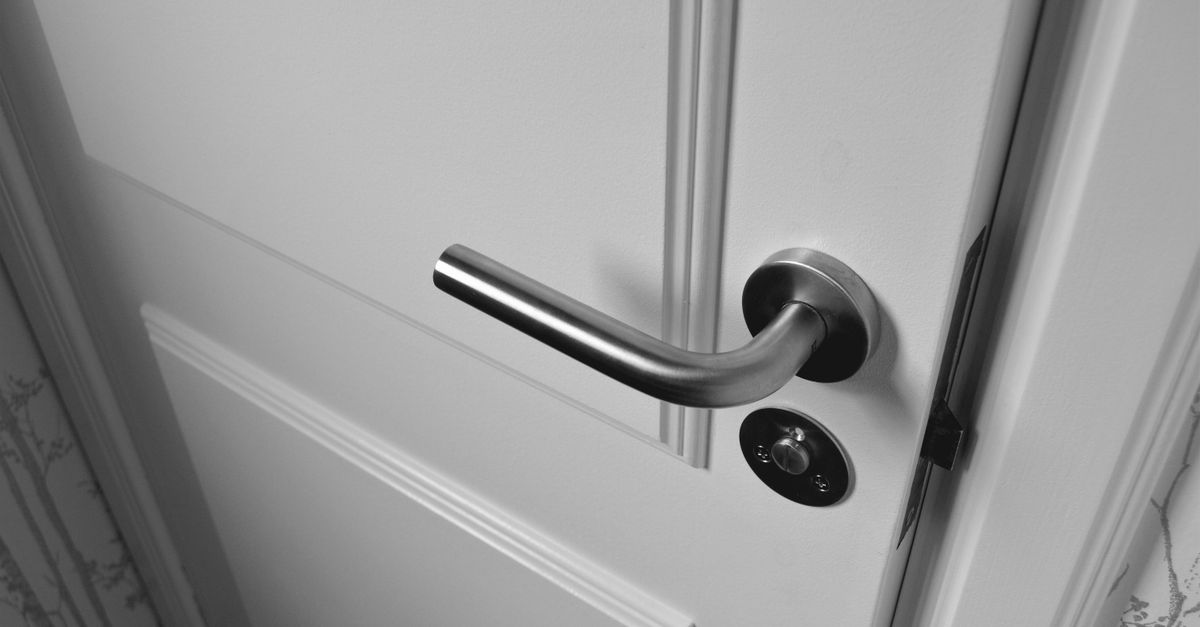
Modern cylindrical locks — the style you see on virtually every new build — work differently. The latch and the lock cylinder are two separate tubular components drilled through the face of the door and the door edge. Installation is faster and the hardware is far cheaper to manufacture, which is why cylindrical locks became dominant after the 1960s. The trade-off is that a cylindrical lock's security depends heavily on the strike plate and the surrounding door frame, whereas a mortise lock distributes load more broadly through the door's thickness. Neither design is inherently unbeatable, but they have genuinely different strengths.
## Mortise Lock vs Cylindrical Lock: Key Differences for Toronto Homeowners
The most practical difference is door compatibility. The thick, often hand-planed doors on a Cabbagetown Victorian or a High Park Edwardian are typically 1¾ to 2 inches deep — well suited to a mortise pocket. Retrofitting a cylindrical lock into one of these doors is entirely possible, but it requires a backset bore that can weaken a door that already has a mortise pocket cut into it. Conversely, trying to cut a fresh mortise into a hollow-core door is a project that rarely ends well. Match the lock type to the door type, and both will perform better. When homeowners ask about a mortise vs non-mortise lock scenario, door thickness is always the first thing a skilled locksmith will check.
Security features also diverge. A quality mortise lock typically includes a deadbolt thrown by the key and a spring latch operated by the knob or lever, all contained in one tamper-resistant box. A good cylindrical deadbolt paired with a separate door knob lock can match that security level — but only when both components are properly installed and the strike plate is anchored with screws long enough to reach the stud behind the frame. A single cylindrical lock doing double duty (latch and deadbolt in one unit, sometimes called a tubular lock or a mortise vs tubular lock comparison) generally offers less resistance to kick-in attacks than either a dedicated deadbolt or a mortise unit. For the heavy wood doors common in older Toronto neighbourhoods, a well-maintained mortise lock remains an excellent security choice.
## When to Repair Your Mortise Lock — and When to Call an Emergency Locksmith
Mortise locks are repairable in ways that cylindrical locks simply are not. The internal components — springs, cams, the tailpiece, the deadbolt mechanism — can be individually replaced by an experienced locksmith without removing the entire door or sourcing a custom replacement case. Many older Toronto homes have Corbin, Sargent, or Yale mortise cases installed decades ago, and good-quality parts are still available. A lock that feels stiff, that does not throw its bolt cleanly, or whose key has become difficult to turn is usually a lubrication and adjustment job, not a replacement job. Graphite powder (not oil-based lubricants, which attract grime) worked into the keyway every year or two keeps most mortise cases operating smoothly.
The situation changes when the lock body itself is cracked, when the bolt no longer fully extends, or when you are locked out entirely. At that point, reaching our team at Guardian Gate Toronto Locksmith is the fastest and safest path forward. Our mobile locksmiths carry common mortise lock cases, escutcheon hardware, and cylinder cores on the van — so a front-door lockout on a Roncesvalles rowhouse at midnight does not have to mean a wrecked door frame by morning. Call 437-525-4159 any time; we are available 24/7 and we confirm an exact price before any work begins. The factors that shape that quote include the lock type involved, the time of the call, travel distance, and whether replacement parts are needed — there are no hidden additions after the fact.
## Mortise vs Rim Cylinder, Door Knob Lock, and Other Variations Explained
Homeowners researching this topic often encounter a few overlapping terms. A rim lock (or rim cylinder, sometimes called a night latch) mounts on the interior surface of the door rather than inside a pocket. It was common in Toronto row houses built between roughly 1900 and 1940 as a secondary latch alongside a mortise deadbolt. The mortise vs rim lock debate is less about security and more about convenience: rim latches are easy to replace and easy to operate from the inside, but they offer less forced-entry resistance than a full mortise unit and are better treated as a supplementary latch rather than primary security.
A door knob lock, strictly speaking, is a cylindrical lock whose locking mechanism is integrated into the knob itself rather than a separate deadbolt cylinder. These are fine for interior doors — bedrooms, bathrooms, utility rooms — but security professionals generally discourage relying on a knob lock alone for an exterior door, because the knob housing can be snapped off with enough force. If you have an older home whose exterior door currently has only a knob lock (perhaps installed as a quick fix at some point), pairing it with a quality deadbolt or upgrading to a full mortise unit is a worthwhile conversation to have with a professional locksmith. Our team works on everything from period-accurate mortise hardware to contemporary Schlage and Kwikset cylindrical sets, so we can give you an honest recommendation based on what is already in your door.
## Which Lock Is Right for Your Older Toronto Home — and What a Commercial Locksmith Perspective Adds
For a genuine Victorian or Edwardian door in good structural condition, our strong recommendation is to keep and service the mortise lock unless the case is cracked or the door has been badly damaged. The mortise format was designed for exactly these doors, the security profile is solid, and a well-maintained original unit has decades of life left. If the existing cylinder (the part that reads the key) is worn or you want to upgrade to a higher-security keyway, a mortise cylinder re-core is a clean solution that modernises the security without altering the door or the escutcheon.
For homeowners whose door has already been modified — perhaps a previous owner installed a cylindrical bore and partially filled the mortise pocket — the calculation shifts. Here a quality cylindrical deadbolt with a reinforced strike plate and a separate door knob lock for the latch may be the more practical path. The same logic applies if you are managing a rental property or a multi-unit building, where fast, standardised re-keying across many units is a priority. This is where a commercial locksmith perspective is relevant: the lock that is easiest to re-key across a portfolio is not always the same as the lock best suited to a single-family Victorian. Our team works with both residential and commercial clients across the Toronto area and can advise on master-key systems, high-security cylinders, and access-control upgrades that complement either lock type. If you are ready to have a professional assess your door and hardware, call 437-525-4159 — we are on the road 24/7 and will come to you.
## Our Locksmith Services: What Guardian Gate Toronto Handles
Guardian Gate Toronto Locksmith is a fully mobile, insured locksmith service covering Toronto and the surrounding area around the clock. Our team handles residential lockouts, mortise lock repair and replacement, cylindrical lock installation, deadbolt upgrades, rim lock servicing, door knob lock replacement, high-security cylinder re-coring, master-key system design, lock re-keying, smart lock installation, sliding door lock repair, garage door lock service, window lock installation, lock lubrication and maintenance, broken key extraction, lock-body replacement after a break-in, security assessments for older homes, multi-unit building re-keying, mailbox lock replacement, padlock removal and replacement, safe opening and combination changes, car lockouts, motorcycle lockouts, transponder key programming, automotive key cutting, ignition lock repair, and commercial door hardware installation. Whether the call is a straightforward re-key or a complex mortise case rebuild on a 100-year-old door, we carry the tools and parts to handle it on-site.
Frequently asked questions
Can I replace a mortise lock with a cylindrical lock on my older Toronto home?+
Yes, it is physically possible, but it requires careful assessment first. Older Toronto doors built with a mortise pocket already have material removed from the door edge. Drilling the additional bores needed for a cylindrical lock into the same door can weaken it, depending on the wood species, door thickness, and where the existing pocket sits. A skilled locksmith will measure the door, check the frame and the existing pocket dimensions, and advise whether the door can safely accept the new hardware. In many cases, re-coring or replacing the mortise case is the cleaner and stronger solution for a period door.
Is a mortise lock more secure than a cylindrical deadbolt?+
Both can be highly secure when properly installed and maintained. A mortise lock integrates the deadbolt, latch, and sometimes additional security elements into a single case buried deep in the door, which distributes stress well across the door's thickness. A cylindrical deadbolt can reach the same security level when paired with a heavy-duty strike plate anchored into the door frame stud and a separate door knob lock for the latch. The weak point for either system is usually the frame and the strike plate, not the lock body itself — so frame reinforcement matters as much as lock selection.
My old mortise lock is stiff and the key is hard to turn — should I replace it?+
Not necessarily. Stiffness and a hard-turning key are among the most common mortise lock complaints and are usually caused by dried-out or gummed-up internal components rather than a failing mechanism. A locksmith can disassemble the case, clean the internals, replace worn springs or cams, and re-lubricate with an appropriate dry lubricant. This service typically restores a century-old mortise lock to smooth operation. Replacement becomes the better option when the lock body is cracked, the bolt no longer extends fully, or the case is so worn that parts cannot bring it back to reliable function — a professional assessment will tell you which situation you are in.
What is the difference between a mortise lock and a rim lock, and which should I have on my front door?+
A mortise lock is set inside a pocket cut into the door edge, making it an integral part of the door structure. A rim lock (or rim cylinder) mounts on the interior surface of the door with a latch body that is visible on the inside — common as a secondary latch on Toronto row houses built in the early twentieth century. For a front door, a mortise lock or a quality cylindrical deadbolt provides superior forced-entry resistance. A rim latch is best used as a convenient secondary lock rather than your primary security, because its surface-mounted box is more vulnerable to brute-force attack than a lock set deep in the door's edge.